SANZAF
  • About Us
    • Awards & Partners
    • Audited Annual Financial Statements
    • Integrated Reports
  • Resources
    • Zakah Calculator
    • Zakah Consultant
    • Zakah Academy - Coming Soon
    • Blog
    • News
    • Media
    • Events
  • Impactful Stories
  • Contact Us
    • Regional Offices
    • Banking Details
Quick Donate

QUICK DONATE

if you require a S18a tax certificate please use the main donate button at the bottom of the page

Quick Donate
Zakah Consultancy

SANZAF Careers Day 2026: Opening Doors to Skills, Trades and Opportunity

Blog 09 September 2026

SANZAF Careers Day 2026: Opening Doors to Skills, Trades and Opportunity

A successful future does not follow only one path.

For some young people, that journey may lead to university. For others, it may begin in a workshop, kitchen, construction site, technology environment or small business. What matters is that young people are given the opportunity to understand the choices available to them and develop the skills needed to build sustainable futures.

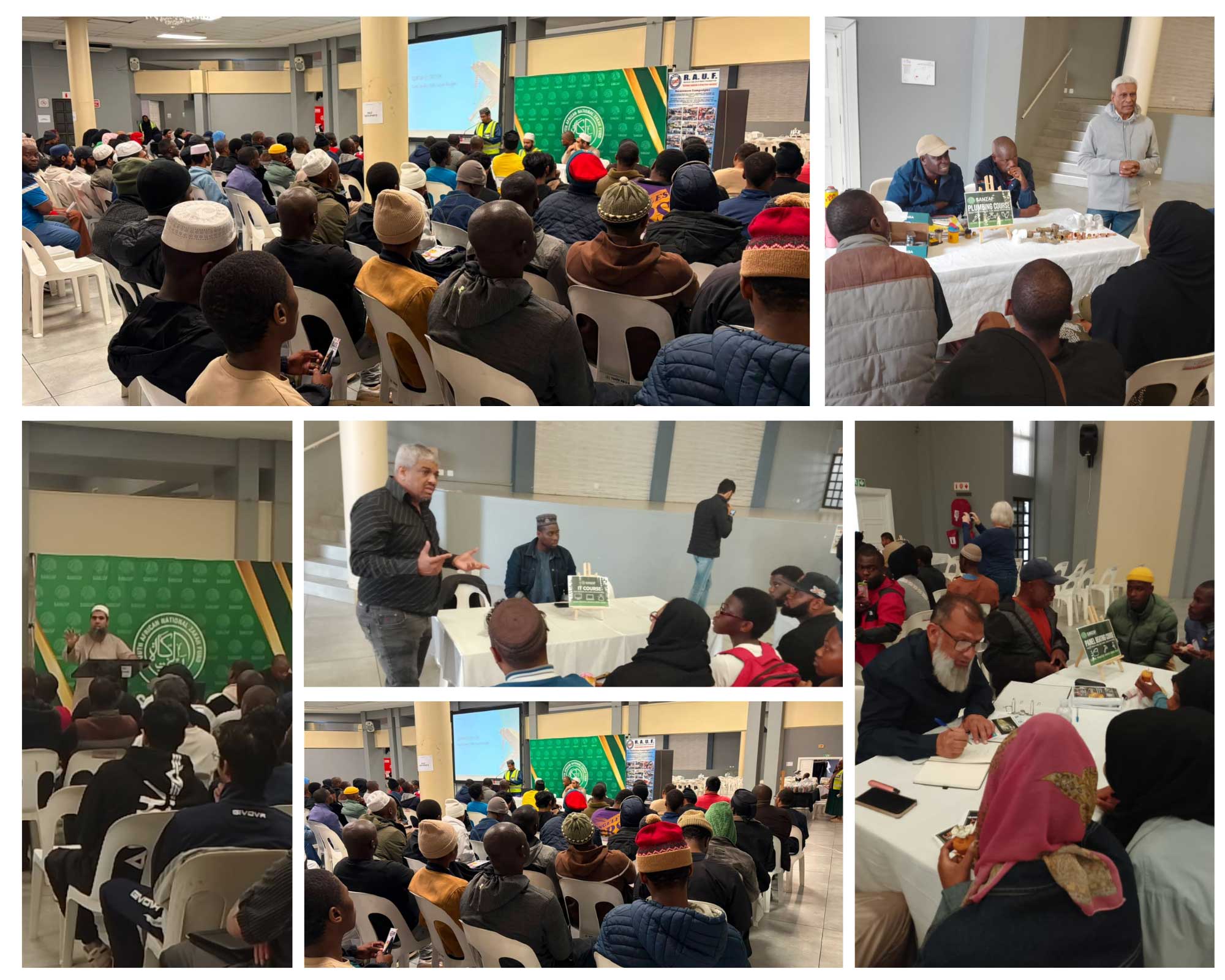
On 5 September 2026, our Durban team hosted its Careers Day at the NMJ Islamic Centre in Morningside, Berea, creating a space where young people could explore practical career pathways, meet training providers and employers, and discover opportunities within South Africa’s vocational and artisan sectors.

From 8:00am to 1:00pm, the Careers Day connected students directly with the people and institutions that could help turn their interests into qualifications, skills and ultimately employment or entrepreneurship.

Exploring Careers Beyond the Classroom

A central objective of the SANZAF Durban Careers Day was to expose young people to skills development, vocational training and artisan careers.

With youth unemployment remaining one of the challenges facing young South Africans, it is increasingly important that learners understand that there are multiple pathways into the world of work.

Students had the opportunity to explore career and training opportunities across a diverse range of fields, including:

  • Agriculture
  • Air conditioning
  • Auto electrical
  • Barista training
  • Carpentry
  • Chef training
  • Electrical
  • Information Technology (IT)
  • Mechanics
  • Panel beating
  • Plumbing
  • Sewing
  • Spray painting
  • Welding

The variety of careers represented allowed young people to consider their individual talents, interests and ambitions while learning more about industries they may not previously have considered.

Learning What It Takes to Build a Career

The programme began with a welcome from Shabeer Nhleko, followed by a Quran recitation by Hafez Junaid Akoojee, setting the tone for a day centred on knowledge, purpose and personal development.

Throughout the morning, students heard from speakers who approached career development from different perspectives.

Moulana Junaid Kharsany explored The Muslim Tradesperson, highlighting the importance of character, responsibility, integrity and excellence within one’s profession.

The Re-focus and Upliftment Foundation (R.A.U.F) addressed substance abuse and the consequences it can have on young people’s lives, choices and future opportunities.

Ms Karodia discussed the qualities of a successful tradesperson, while Sajedah Ebrahim explored an important question for learners considering their futures: Why choose a vocational or occupational career?

Students also heard from Chris Milton about career opportunities within technical and vocational trades, providing insight into the possibilities available through skills-based industries.

What Do Employers Look For?

Having a qualification or technical skill is only one part of becoming workplace-ready.

Aziz Choonara helped students understand what employers look for when recruiting young people, highlighting the importance of professionalism, workplace readiness, technical ability and personal qualities.

The programme also introduced participants to entrepreneurship within agriculture. Ms Snothando’s presentation, Farming to Enterprise, demonstrated how agricultural skills can potentially develop beyond employment into viable entrepreneurial opportunities.

The programme concluded with a representative from Hypercheck, who explored pathways to employment, apprenticeships and further training.

Together, these conversations helped young people see the connection between training, employability, entrepreneurship and long-term career development.

From Career Advice to Real-World Exposure

One of the most valuable aspects of Careers Day happened beyond the formal presentations.

Students had the opportunity to network directly with training providers, employers and industry professionals.

Instead of simply hearing about a career, they could speak to people working within the sector, ask questions about training requirements and better understand what different occupations involve.

Live demonstrations brought some of these careers to life.

For a young person still deciding what comes after school, seeing a practical skill demonstrated and speaking directly to someone within that profession can make an unfamiliar career feel achievable.

The Careers Day therefore became more than an information session. It created a bridge between young people, skills training providers and industry.

Skills Development as a Pathway to Opportunity

SANZAF believes education and skills development are important tools for sustainable empowerment.

Vocational and occupational training can provide young people with pathways into employment while also creating opportunities for entrepreneurship and self-reliance.

A qualified plumber, electrician, welder, mechanic, chef or artisan does not simply possess a technical skill. That skill can become the foundation for employment, a small business and eventually the ability to create opportunities for others.

The Careers Day reflected this broader vision by bringing education, vocational training, employers and community organisations together in one space.

Most importantly, the event opened the door for continued mentorship, skills development and training opportunities through SANZAF.

Thank You for Investing in Young Futures

A sincere thank you goes to every student, speaker, exhibitor, training provider, employer and partner who contributed towards making the SANZAF Careers Day possible.

Your participation created an environment where young people could ask questions, challenge assumptions about careers and begin thinking differently about what their futures could hold.

Every conversation mattered.

Every demonstration created exposure.

And every new career possibility discovered could represent the beginning of a young person’s journey towards greater independence.

The journey towards a career begins with discovering what is possible.

Missed SANZAF Careers Day?

The opportunity to explore your future does not end with the Careers Day.

If you were unable to attend, you can still contact participating training providers and organisations directly to learn more about artisan training, vocational courses, apprenticeships, chef and barista training, welding, skills development and support services.

Artisan Development Academy
Email: This email address is being protected from spambots. You need JavaScript enabled to view it.
Tel: (+27) 31 468 1510

Samson Welding School
Email: This email address is being protected from spambots. You need JavaScript enabled to view it.
Tel: 073 694 6643 / 031 563 1906

GMK EDU Skills Training
Email: This email address is being protected from spambots. You need JavaScript enabled to view it.
Tel: 060 811 4809

SANZAF Chef School & Barista Training
Contact: Sajedah Ebrahim
Tel: 031 309 6786

Umbilo Training Specialist
Email: This email address is being protected from spambots. You need JavaScript enabled to view it. / This email address is being protected from spambots. You need JavaScript enabled to view it.
Tel: 085 408 437

Abethu Training Centre
Email: This email address is being protected from spambots. You need JavaScript enabled to view it.
Tel: 031 309 4309 / 074 459 5134

R.A.U.F – Substance Abuse Support
Email: This email address is being protected from spambots. You need JavaScript enabled to view it.
Tel: 031 269 3662

Sponsor a Skill. Feed a Future.

SANZAF remains committed to helping young people access skills development, vocational training, mentorship and pathways to employment.

But creating these opportunities requires collective support.

Your contribution can help a young person gain a practical skill, access training and take another step towards employment, entrepreneurship and greater self-reliance.

Sponsor a Skill. Feed a Future.

Support SANZAF’s education and skills development initiatives and help us turn potential into skills, skills into opportunity and opportunity into sustainable futures.

For more information about Durban’s skills development and youth empowerment programmes, contact our Durban office on 031 309 6786.

Women's Upliftment Workshop

Blog 31 August 2026

Empowering Women, Strengthening Communities: SANZAF Women’s Upliftment Workshop in Durban

Empowerment begins when knowledge becomes confidence, skills become opportunity and women are given the space to recognise their own potential.

From 17 to 19 August 2026, SANZAF welcomed women to its Durban office for a three-day Women’s Upliftment Workshop, bringing together financial literacy, practical skills development, Islamic guidance and conversations around women’s rights and dignity.

The programme formed part of SANZAF’s broader commitment to women empowerment and sustainable community development in South Africa. Over three days, participants moved from learning how to strengthen their financial futures, to developing practical food skills and finally to reflecting on their rights, self-worth and ability to make choices for themselves and their families.

It was women’s empowerment in action: learning together, growing together and turning practical skills into possibilities.

Day 1: Financial Literacy, Personal Growth and Women in Islam

The programme began with 26 women gathering for a day centred on personal development and financial empowerment for women.

Through motivational and educational sessions facilitated by Shabnam Bux and Apa Sumayya Kharsany, participants explored practical financial skills that can contribute to greater independence and more informed decision-making.

The sessions addressed important areas including budgeting and managing household expenses, retirement planning, business finances and financial independence.

For women managing households, considering entrepreneurship or planning for their long-term futures, financial literacy can be a powerful tool. Understanding how money is earned, managed, saved and planned allows women to make more informed choices for themselves and their families.

The day also explored the rights and responsibilities of women in Islam.

Participants reflected on the opportunities Islam affords women to pursue knowledge, build careers and manage their own wealth, while also recognising the invaluable contribution women make in nurturing families and shaping future generations.

Bringing financial education and Islamic guidance into the same conversation reinforced an important message: empowerment can be both practical and values-driven.

Day 2: Practical Skills That Can Become Opportunities

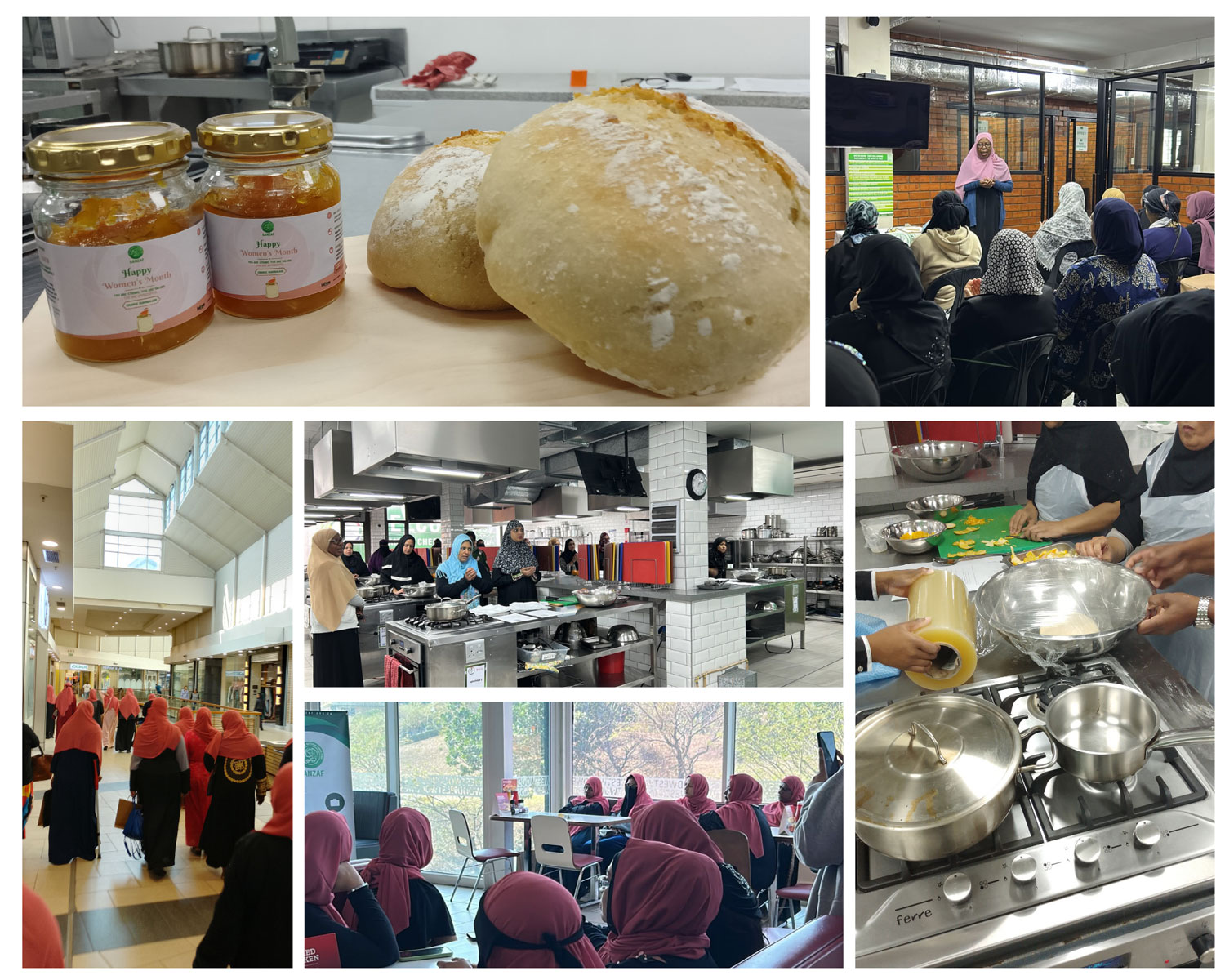
On Day 2, learning moved from financial planning to the SANZAF Chef School kitchen as participants rolled up their sleeves for a practical skills development session.

The aroma of freshly baked artisan bread soon filled the room as the women learnt to bake artisan bread and prepare homemade orange jam from scratch.

Alongside these skills, participants explored food preservation techniques that can help households reduce food waste, extend the shelf life of produce and make better use of everyday ingredients.

But the real value of the day extended beyond the kitchen.

Between batches of bread and jars of jam came conversations, laughter, shared knowledge and the confidence that grows from learning something new alongside others.

Importantly, these are skills with possibilities beyond the workshop. Participants can use them at home, share them with family members or potentially develop them into small income-generating opportunities or home-based businesses.

For SANZAF, skills development is an important part of sustainable empowerment. A practical skill can become a way to save money, supplement household income or even take the first step towards entrepreneurship and greater self-reliance.

Day 3: Women’s Rights, Dignity and the Freedom to Choose

The final day brought the Women’s Upliftment Workshop to a meaningful close, with 21 women gathering at Westwood Mall for a programme centred on dignity, rights, choice and sisterhood.

In a beautiful expression of unity and solidarity for Women’s Month, each participant brought a pink scarf, creating a shared symbol of togetherness, strength and women supporting women.

The programme began with an important conversation about women’s rights from Johanna Herbst, encouraging participants to understand their rights, recognise their self-worth and feel empowered to advocate for themselves.

After three days of learning, the women also had an opportunity to connect and enjoy time together over a shared meal.

This was followed by a shopping experience where each woman was given the freedom to select essential items for herself and her household.

The significance went beyond the items purchased. Having the ability to choose for oneself is closely connected to dignity. The experience created an opportunity for each participant to make decisions according to her own needs and leave feeling seen, valued and supported.

From Knowledge to Confidence and Skills to Possibility

Across three days, the programme demonstrated the value of taking a holistic approach to women’s empowerment and skills development.

Day 1 provided knowledge for stronger financial decision-making. Day 2 transformed practical learning into skills that could support households or potentially generate income. Day 3 created space for conversations about rights, dignity, self-worth and personal choice.

Together, these experiences reflected SANZAF’s belief that empowering a woman can create an impact far beyond one individual.

When a woman develops financial literacy, her household can benefit from stronger financial planning. When she learns a practical skill, that knowledge can be shared with her family or transformed into an income opportunity. When she understands her rights and recognises her worth, she is better equipped to advocate for herself and contribute confidently within her community.

This is how empowerment creates a ripple effect—strengthening women, families and ultimately entire communities.

A heartfelt Jazakallah Khair to Shubum Buxs, Apa Sumya Kharsany, our donors, staff and every participant who contributed to three memorable days of learning, connection and upliftment.

Help Us Create More Opportunities for Women

SANZAF’s Women Empowerment and Skills Development initiatives aim to equip women with knowledge, practical skills and opportunities that encourage confidence, resilience and greater self-reliance.

Your support can help us continue creating spaces where women can learn, develop practical skills, strengthen their financial knowledge and work towards more sustainable futures for themselves and their families.

Help us empower more women to learn, grow and thrive.

💚 Support SANZAF’s Women Empowerment and Skills Development initiatives and help turn knowledge into opportunity, skills into livelihoods and empowerment into lasting community impact.

Turning Pages, Shaping Futures: SANZAF Partners with We Love Reading to Inspire a Culture of Reading

Turning Pages, Shaping Futures: SANZAF Partners with We Love Reading to Inspire a Culture of Reading

Blog 19 August 2026

Books can open doors to imagination, strengthen language and communication, encourage curiosity and help children see possibilities beyond their immediate surroundings. But nurturing a lifelong love of reading requires more than simply placing a book in a child’s hands. It requires enthusiastic educators, engaging storytellers and communities that make reading an experience children genuinely look forward to.

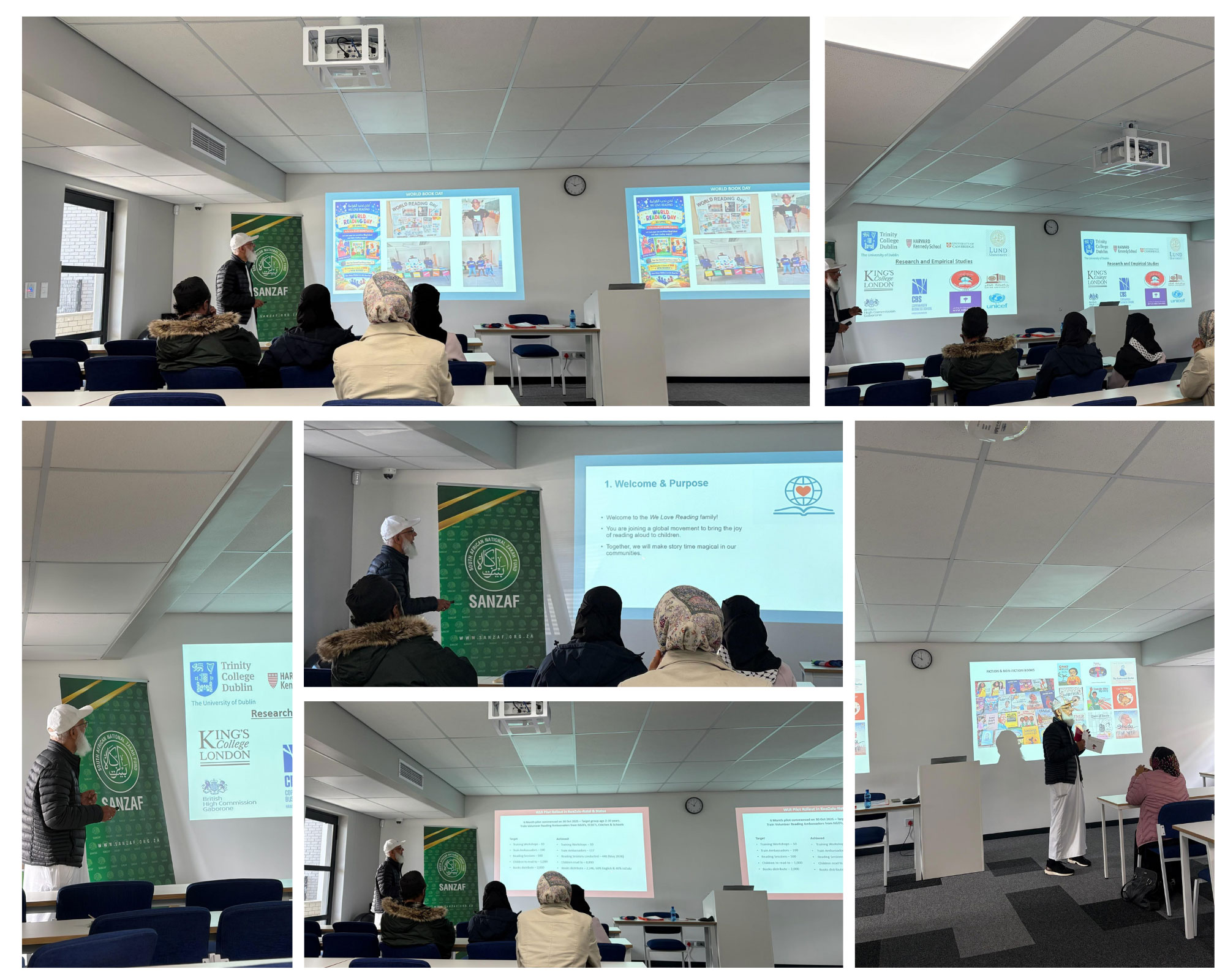
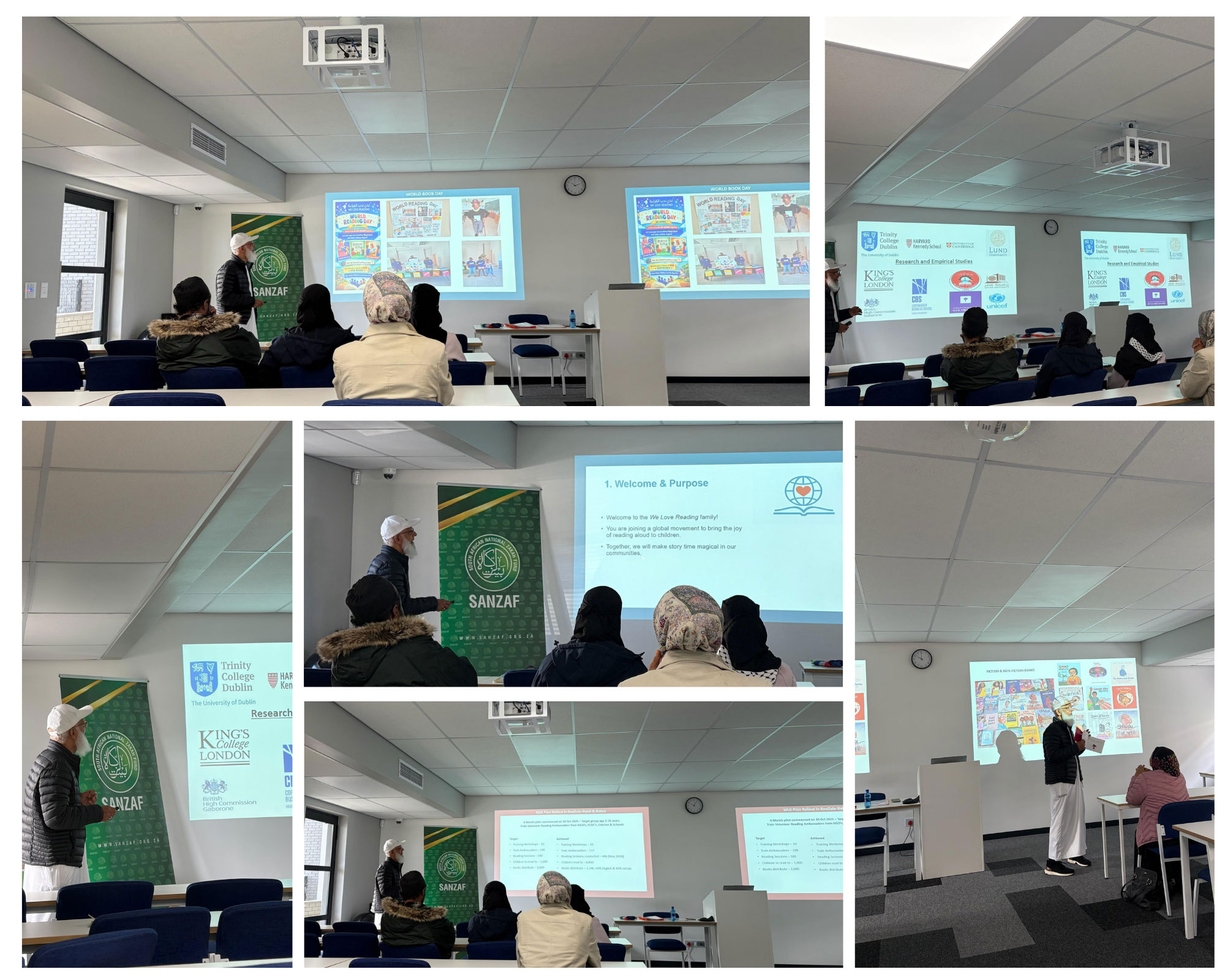
Recognising the important role educators and community leaders play in shaping young minds, SANZAF partnered with We Love Reading to host an engaging literacy workshop for educators, madrasah teachers and community leaders on 24 July 2026 at the EMIRIS Nelson Mandela Bay Campus in Gqeberha.

The workshop equipped participants with practical tools and storytelling techniques they can take back into their classrooms, madrasahs and communities, extending the impact of a single training session to potentially reach many more young readers.

About We Love Reading: Changing Mindsets Through Reading

We Love Reading is an international, research-informed programme dedicated to fostering a love of reading for pleasure among children.

The programme operates under the patronage of Taghyeer, an independent nonprofit organisation founded in Amman, Jordan. Its model is simple yet powerful: local women, men and youth are trained to become reading ambassadors who regularly read aloud to children in community spaces.

Rather than focusing solely on teaching children how to read, We Love Reading seeks to help children want to read.

Its approach is designed to be simple, sustainable and scalable, while giving communities ownership by equipping local people to lead reading activities themselves. Today, We Love Reading has spread to more than 71 countries, with thousands of We Love Reading libraries established around the world.

At the heart of its philosophy is the belief that small actions can create far-reaching change, a principle that resonates deeply with SANZAF’s commitment to education and sustainable community development.

Equipping the People Who Shape Young Minds

Gathered at the EMIRIS Nelson Mandela Bay Campus, the workshop brought together educators, madrasah teachers and community leaders united by a common purpose: helping children build a meaningful and lasting relationship with books.

Advocate Mahomed Vahed, Literacy Ambassador with the Department of Basic Education and representative of the Young Leaders Academy, facilitated the programme.

Through an engaging and practical approach, Advocate Vahed demonstrated techniques participants could use to make reading more exciting, interactive and meaningful for learners.

The workshop focused on three key areas:

  • Practical techniques to nurture a love of reading and encourage children to engage enthusiastically with books.
  • Supporting literacy development by helping educators create positive and stimulating reading experiences.
  • Building a stronger culture of reading within schools, madrasahs, homes and broader communities.

Participants explored how the way a story is shared can transform reading from a classroom exercise into something memorable, an experience filled with curiosity, imagination and connection.

Why a Love of Reading Matters

Literacy is foundational to a child’s educational journey, but the value of reading extends far beyond academic achievement.

When children engage regularly with books, they encounter new words, ideas, people and perspectives. Reading can expand vocabulary, strengthen comprehension and encourage children to ask questions, imagine possibilities and express themselves with greater confidence.

This is why empowering educators is so important.

One educator equipped with effective techniques can influence an entire classroom. A madrasah teacher can introduce those techniques to another group of learners. A community leader can create spaces where children gather around stories.

The impact begins to multiply.

By investing in the adults who guide children, SANZAF is helping to create environments where reading is not experienced simply as another task to complete, but as something children can enjoy and carry with them throughout their lives.

From a Workshop to a Reading Culture

The true measure of this initiative will not only be found in what participants learned on the day, but in what happens afterwards.

It will be found when an educator brings a story to life in the classroom.

When a madrasah teacher makes time for children to discover the joy of books.

When a reluctant reader becomes curious about the next page.

And when that curiosity develops into a lifelong habit of learning.

Creating a culture of reading is not achieved overnight. It grows through consistent, intentional moments - one educator, one story and one child at a time.

Through collaborations such as this, SANZAF continues to invest in education as a powerful means of empowerment and sustainable community upliftment.

We extend our heartfelt appreciation to We Love Reading, Advocate Mahomed Vahed and every educator, madrasah teacher and community leader who participated with such enthusiasm and commitment.

May the knowledge shared continue to travel beyond the workshop, into classrooms and communities, inspiring children to discover the wonder held within the pages of a book.

Because when we help a child fall in love with reading, we do more than develop a reader, we open the door to a lifetime of learning.


Give your Zakah, Sadaqah or Lillah through SANZAF and help us continue providing dignity, relief and development opportunity to communities in need.

DONATE NOW
Visit www.sanzaf.org.za/donate

Contact our office for more information 041 457 1459 or This email address is being protected from spambots. You need JavaScript enabled to view it.

From a Need for Water to a Source of Hope: SANZAF Hands Over Borehole in Isithumba Village

From a Need for Water to a Source of Hope: SANZAF Hands Over Borehole in Isithumba Village

Blog 19 August 2026

Water is something many of us access without a second thought. We turn on a tap to drink, prepare a meal, wash, clean or care for our families.

But when reliable access to clean water is limited, something as ordinary as filling a glass can become a daily challenge.

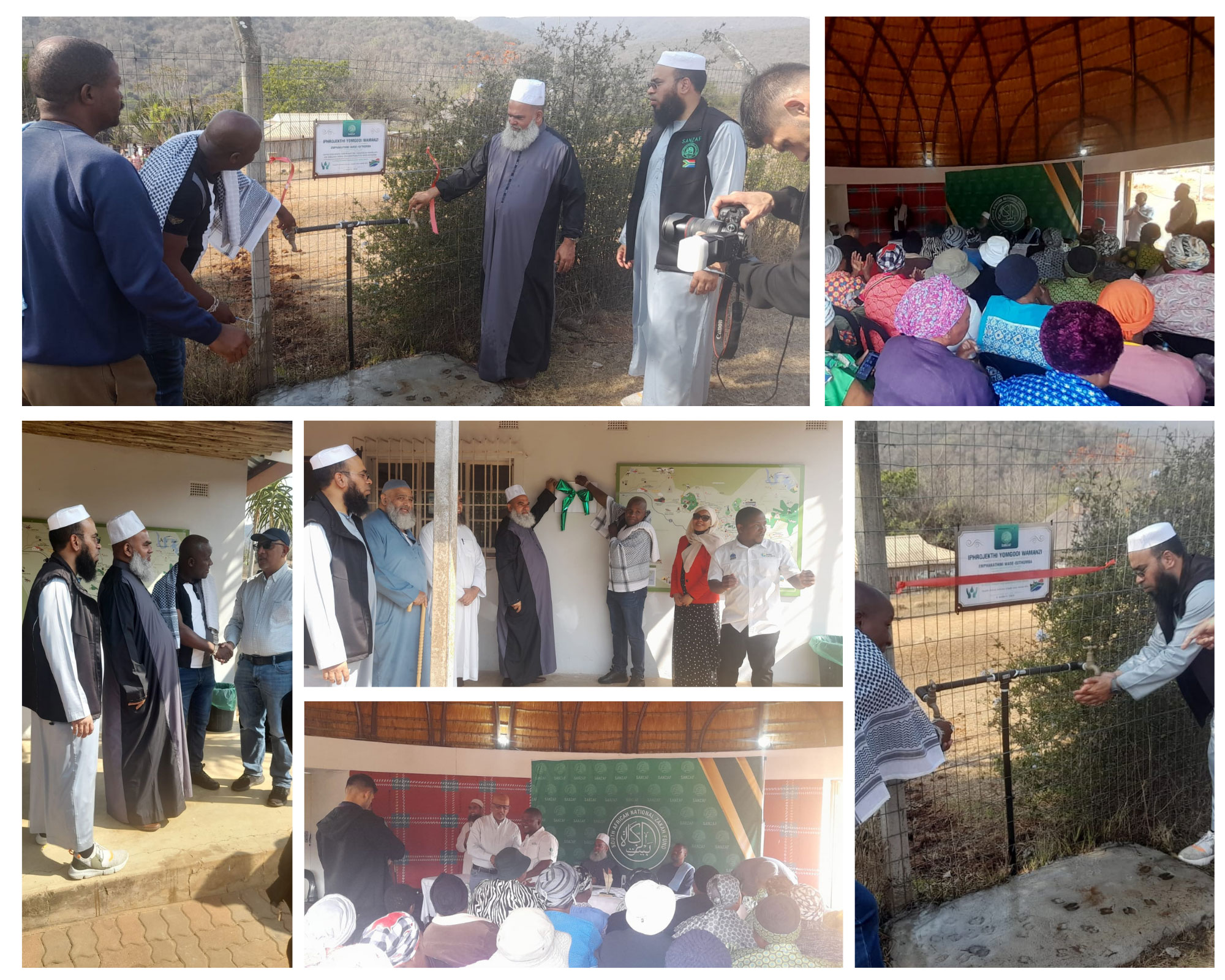
On 8 August 2026, SANZAF joined the community of Isithumba Village in the KwaXimba District in Durban for a meaningful milestone: the official handover of a newly installed borehole created to improve access to clean water for children and families in the area.

More than the unveiling of a completed project, the occasion represented what can happen when a community need is heard and support is transformed into a sustainable solution.

Responding to a Fundamental Need

Access to water touches almost every part of daily life.

It supports drinking and food preparation, personal hygiene, household responsibilities and the general well-being of families. Where access is difficult, the effects can be felt throughout a household and across an entire community.

Through engagement with members of the Isithumba community, the need for improved water access was identified. SANZAF responded by working towards a practical solution that would offer benefits beyond a once-off intervention.

The result was the installation of a borehole.

Its significance lies not only in providing water today, but in creating infrastructure that can continue serving the community into the future.

This reflects an important part of SANZAF’s approach to community upliftment: listening to the realities faced by communities and seeking solutions that promote dignity, resilience and longer-term well-being.

A Special Day for the Isithumba Community

The handover brought together SANZAF representatives, community members, local leadership and stakeholders to mark the completion of the project.

One of the most memorable moments was seeing the first water from the newly completed borehole being used.

It was a simple moment carrying profound meaning.

Behind that flowing water was a journey that began with identifying a need and culminated in infrastructure that can make everyday life easier for families in the area.

The official unveiling of the project plaque commemorated the occasion, while community representatives had an opportunity to speak and share in a moment that belonged, ultimately, to the people the borehole was created to serve.

The gathering also provided SANZAF with an important opportunity to engage directly with community members. These relationships matter because meaningful development begins with listening - not assuming what a community needs, but engaging with the people who understand their circumstances best.

More Than Water: Investing in Sustainable Community Development

Humanitarian support is often associated with responding to immediate hardship. While emergency assistance remains essential, sustainable community development asks another important question:

How can today’s support continue creating value tomorrow?

The Isithumba borehole represents this principle in action.

Unlike assistance that is consumed once, infrastructure has the potential to continue serving people repeatedly. Every time a child, parent or community member accesses the water, the project continues fulfilling its purpose.

It is this transition, from responding to a need to strengthening a community’s ability to meet that need - that makes sustainable interventions so valuable.

For SANZAF, community upliftment is about more than providing assistance. It is about preserving dignity and working towards solutions that can create meaningful, lasting change.

Turning Generosity into Lasting Impact

Projects such as the Isithumba borehole also demonstrate what donor support can make possible.

A contribution to humanitarian and development work may begin as an act of generosity, but its impact can extend much further. When directed towards sustainable infrastructure, that generosity can become something tangible, something communities can use and benefit from long after the initial project has been completed.

The borehole now stands as a physical reminder of the power of collective care.

It represents the journey from need, to action, to impact.

It also demonstrates why continued support for community development matters. Across South Africa, communities face different challenges and effective responses require understanding those needs and investing in interventions that are appropriate, practical and sustainable.

Listening to Communities, Building Solutions

The handover in Isithumba was therefore not simply the conclusion of a project.

It was a celebration of community connection and a reminder of what becomes possible when people work together towards a shared purpose.

SANZAF remains committed to engaging communities, identifying genuine needs and supporting initiatives that promote dignity and long-term upliftment.

The borehole may be a single project in a single village, but its meaning extends beyond the infrastructure itself.

It is found in every family that can benefit from improved access to water.

It is found in the relationships strengthened through the project.

And it is found in the knowledge that generosity, when transformed into sustainable action, can continue giving long after the day of the handover.

Give your Zakah, Sadaqah or Lillah through SANZAF and help us continue providing dignity, relief and opportunity to communities in need.

DONATE NOW
Visit www.sanzaf.org.za/donate

Support our community development initiatives today. Contact our office on 031 309 6786

Barakah Over Balance: Reflections from SANZAF’s Women in Islamic Business & Finance Webinar

Barakah Over Balance: Reflections from SANZAF’s Women in Islamic Business & Finance Webinar

Blog 19 August 2026

On Saturday, 8 August 2026, SANZAF hosted its Women in Islamic Business & Finance webinar, bringing together Muslim women across the country for a morning of reflection on leadership, professional growth, faith, family, community and the responsibilities entrusted to us.

Held during Women’s Month, the webinar moved beyond a conventional conversation about achievement. Instead, it asked deeper questions about what it means for Muslim women to pursue excellence while remaining rooted in faith, sincerity and purpose.

Across both keynote sessions, one concept emerged repeatedly: Amānah — the trust and responsibility placed upon us by Allah (SWT).

Whether in the boardroom, the classroom, the home, the community or our personal acts of worship, the message was clear: the many roles women carry do not have to exist in competition with one another. When guided by sincere intention, each of them can become part of a life lived in service to Allah (SWT).

Empowered women strengthen communities

Shaykha Basheerah Hendricks Gamieldien opened the webinar with an opening Dua followed by SANZAF CEO Yasmina Francke with the opening address. Yasmina Francke reflected on the significance of Women’s Month and the broader theme that empowered women empower communities.

For more than five decades, SANZAF has witnessed how empowering a woman reaches far beyond the individual. The effects extend into her family, her workplace, her community and ultimately, future generations.

This understanding is closely aligned with SANZAF’s approach to sustainable development. While immediate relief from hunger, poverty and hardship remains essential, sustainable change also requires investment in people, developing potential and creating opportunities for individuals to flourish with dignity.

It is from this conviction that SANZAF’s Women in Islamic Business & Finance initiative was established.

Muslim women today are leading organisations, building businesses, serving communities, raising families, pursuing academic excellence and contributing meaningfully to the future of South Africa. At the same time, they are navigating the demands of professional life while trying to remain connected to faith, family and wider responsibilities.

The opening session therefore posed several important questions:

How do we pursue excellence without losing ourselves?

How do we remain spiritually grounded while navigating increasingly complex lives?

And how does our faith continue to guide our decisions, relationships and purpose?

The webinar was not simply about celebrating women’s achievements. It created a space to reflect on how empowerment can also be measured through the values we uphold, the people we uplift and the legacies we leave behind.

Leadership is an Amānah

The first keynote session was delivered by Shaykha Umme Roomaan Soofie, who explored the role of Muslim women in leadership, work and community upliftment.

Her session was structured around three themes: leadership, labour and Islah, or community upliftment. All three, she explained, sit beneath the wider concept of Amānah — something entrusted to us rather than owned by us, and something for which we will ultimately be accountable.

Drawing from Surah At-Tawbah, verse 71, she reflected on the Quranic description of believing men and believing women as allies and guardians of one another. The verse names shared responsibilities, including enjoining what is right, forbidding what is wrong, establishing Salah, giving Zakah and obeying Allah (SWT) and His Messenger (SAW).

The believers, both men and women, are guardians of one another. They encourage good and forbid evil, establish prayer and pay alms-tax, and obey Allah and His Messenger. It is they who will be shown Allah’s mercy. Surely Allah is Almighty, All-Wise. Surah At-Tawbah, verse 71

Her key reflection was that this responsibility for the moral and social wellbeing of the Ummah is shared. It is not a conversation that begins with asking whether Muslim women are permitted to lead or contribute. Islamic history has already provided countless examples of women who did exactly that.

The more important question is: How do we carry that responsibility well?

Muslim women have always led

To illustrate this, Shaykha Umme Roomaan revisited the stories of women from Islamic history whose scholarship, courage and service left a lasting impact.

She spoke about Umm al-Darda al-Sughra, a respected scholar who taught Hadith and Fiqh and whose students included a future Umayyad caliph. Even after attaining political power, he continued attending her classes.

The lesson was striking: her authority did not depend on a title. It rested on knowledge, sincerity and competence.

Leadership, therefore, should not be treated as a permission slip waiting to be handed to women.

Instead, it can be understood as competence married to sincerity.

At the same time, leadership must remain spiritually grounded.

Shaykha Umme Roomaan cautioned against allowing titles, success or recognition to become the foundation of one’s identity. If a failed project, difficult quarter or public setback completely erodes a leader’s sense of worth, it may be necessary to ask what that worth was resting upon.

One of the most memorable reflections of the session was:

Leadership is a trust that we administer, not a throne that we occupy.

When Amānah is carried correctly, success should not inflate us, and setbacks should not destroy us.

Professional excellence can become worship

The conversation then shifted from formal leadership to everyday work.

Shaykha Umme Roomaan drew on the example of Al-Shifa bint Abdullah, one of the literate women of early Madinah, who was asked by the Prophet (SAW) to teach Hafsa (RA) to read and write.

The significance of the story was not simply that a woman’s competence was permitted. Her competence was actively put to use.

This led to an important reflection for Muslim women in contemporary professional spaces.

A spreadsheet, report, classroom lesson, client meeting, case file or business negotiation does not have to be spiritually separate from the rest of our lives.

With sincere Niyyah, ordinary work can become part of our worship.

A woman who manages a team, negotiates a contract, teaches children or develops a compliance framework with the intention of fulfilling an Amānah and benefiting others can transform her everyday labour into an act of service to Allah (SWT).

This challenges the idea that “worldly work” and “religious work” must always compete for our time.

Our intention can connect them.

The women who preserved Islamic knowledge

Another powerful segment of the session focused on the contribution of women to Islamic scholarship.

Shaykha Umme Roomaan referred to the extensive research of scholar Mohammad Akram Nadwi, who documented nearly 9,000 female Hadith scholars and transmitters across Islamic history.

These women studied, memorised, travelled, examined narrators, corrected errors and transmitted Prophetic knowledge from one generation to another.

They were not merely a footnote to Islamic scholarship.

They formed part of its infrastructure.

This became a powerful metaphor for the unseen labour women continue to perform today.

Community upliftment does not always look like a stage, a microphone or a public title. Sometimes it is the woman who checks that educational material is accurate, corrects misinformation before it spreads, mentors a younger colleague or quietly supports someone through a difficult season.

Much of the work that holds communities together is never publicly recognised.

That does not make it insignificant.

Serving without needing applause

Through the example of Rabi’a al-Adawiyya, the webinar also explored the question of sincerity.

What happens when we serve our communities because we need to be seen serving them?

If service depends on recognition, it can become difficult to sustain when the recognition disappears.

The challenge is to serve because the work needs to be done and because it is pleasing to Allah (SWT), whether or not anyone applauds.

For anyone working in community development, nonprofit spaces or volunteerism, this was an especially important reminder.

Building institutions that outlive us

Shaykha Umme Roomaan also reflected on the legacy associated with Fatima al-Fihri, remembered for founding the institution that became Al-Qarawiyyin.

The lesson was not simply that a Muslim woman entered an institution.

She helped build one.

This shifted the conversation from individual success to long-term legacy.

What are we building that others will still benefit from when we are no longer here?

The session then brought this idea closer to home by referring to South African Muslim history, including figures such as Shaykh Yusuf of Macassar and Tuan Guru.

Their stories demonstrate that building, teaching and uplifting communities under difficult circumstances is deeply connected to the history of Islam in South Africa.

Women serving their families, workplaces and communities today are not necessarily beginning a new story.

They are continuing a legacy.

What if work-life balance is the wrong goal?

The second keynote session was delivered by SANZAF CEO Yasmina Francke, who addressed professional growth and the challenge of balancing work and personal life.

But rather than presenting another formula for achieving perfect work-life balance, she challenged the premise itself.

Her presentation was framed around Barakah rather than balance.

Drawing on more than 30 years of professional experience, she shared openly that she too has struggled with work-life balance.

Some days work requires more. On other days, family needs more. At other times, community responsibilities take priority.

This led to an important question:

What if balance is not actually the destination?

Women often carry multiple identities at once: professional, mother, wife, daughter, caregiver, volunteer, friend, leader and Muslim.

Every role comes with expectations.

The problem, Yasmina Francke suggested, may not always be a lack of time.

Sometimes, the problem is expectation.

We compare ourselves to others, absorb expectations from culture and society, and place pressure on ourselves to perform every role perfectly every day.

But when did Allah (SWT) ask that of us?

A better question to ask

Yasmina Francke reflected on the guilt women can carry when they feel they are not doing enough at work, at home or even in their worship.

Repeatedly asking, “How do I balance everything?” did not remove that guilt.

Eventually, she began asking a different question:

What has Allah (SWT) entrusted to me in this moment?

That shift changed how she understood time and responsibility.

Balance suggests that every part of life should receive equal attention every day.

But real life does not work that way.

On one day, the Amānah before us may be a child who needs us.

On another, it may be a deadline.

At another point, it may be our health or an ageing parent who needs time, compassion and patience.

Giving one responsibility more attention during a particular moment or season does not necessarily mean that we are failing at everything else.

It may simply mean that we are honouring the trust currently in front of us.

You do not have to water every plant every day

One of the most memorable metaphors of the webinar was the image of a garden.

Yasmina Francke invited women to imagine their lives as a garden filled with different plants:

Our relationship with Allah (SWT), marriage, children, parents, career, health and community.

A wise gardener does not water every plant equally every day.

Instead, she walks through the garden asking:

What needs my attention today?

Some plants need more water.

Some need less.

Sometimes there is a weed that needs to be removed.

In the same way, our responsibilities require different levels of attention during different seasons of life.

Honour the season you are in

Yasmina Francke reflected on the many seasons women experience:

Study, career development, marriage, motherhood, caring for ageing parents, health challenges, loss, healing and spiritual renewal.

Every season carries different responsibilities.

Difficulty often arises when we compare our current season with someone else’s.

Social media can intensify this tendency by showing us carefully selected glimpses of other people’s lives.

Yet the responsibilities of a new mother cannot necessarily be compared with those of a woman caring for elderly parents, a student pursuing her education or someone building a demanding career.

Recognising the season Allah (SWT) has placed us in allows us to respond to our lives with more wisdom and less resentment.

The invisible mental load

The webinar also made space for something many women experience but rarely discuss openly: the mental load.

Who remembers the birthdays?

Who knows when the school project is due?

Who remembers the medication schedule?

Who notices what is missing from the fridge or cupboards?

Who keeps track of the family appointments?

This is not simply about physically performing tasks. It is the invisible work of remembering that they need to happen at all.

That labour requires mental and emotional energy.

It often continues even when our hands are still.

And while others may not always recognise it, the reminder from the session was that Allah (SWT) sees every unseen act of service.

The quiet sacrifices, small acts of care and work that nobody applauds are not wasted.

Rest is not laziness

Another important reflection challenged the way many women treat exhaustion as proof of commitment.

We may wear tiredness like a badge of honour, believing that running on empty demonstrates how much we love our families or how seriously we take our responsibilities.

But exhaustion is not the measure of our worth.

Rest can be part of how we honour our Amānah.

Rest restores our ability to serve with excellence and sincerity.

Allah (SWT) created rhythms of work and rest, night and day.

Neither was meant to completely consume the other.

Protecting our rest is therefore also a way of protecting our ability to serve.

Presence over perfection

The session then invited women to consider what their loved ones are likely to remember.

Probably not the flawless meal.

Not the perfectly folded laundry.

Not the spotless kitchen.

They are more likely to remember how they felt in our presence.

Yasmina Francke reflected on the Prophetic example of attentive listening, warmth, compassion and the ability to make the person in front of him feel that they mattered.

This is the kind of presence we should strive toward.

Not perfect multitasking.

But being fully where our feet are.

Sometimes one sincere, undistracted conversation can be more meaningful than a day of perfectly completed tasks.

One woman, one set of values

Another important reflection challenged the tendency to divide ourselves into separate identities.

The professional at work.

The mother at home.

The Muslim woman during worship.

But our values do not remain in separate rooms.

Integrity should move with us from the boardroom to the kitchen.

Compassion should shape the way we deal with our families and our colleagues.

Honesty should appear in our business dealings and personal relationships.

Sincerity should accompany us wherever we are.

Rather than continually asking, “Who do I need to be in this space?”, Yasmina Francke encouraged women to ask:

How do I honour Allah (SWT) in this space?

Faith does not require women to shrink their excellence

Through the example of Sayyidah Khadijah (RA), the discussion returned to Islamic business and leadership.

Khadijah (RA) was already a successful business woman before Islam.

Her faith did not require her to step away from her excellence.

Instead, her wealth, judgement, generosity and standing became part of how she supported the mission of the Prophet ﷺ.

Her business ability and her faith were not competing versions of her.

They were expressions of the same integrity in different areas of life.

This offers an important reminder to Muslim women today:

Faith does not require us to become less capable, less ambitious or less excellent.

It asks us to ensure that our excellence remains anchored in purpose.

Corporate KPIs and spiritual KPIs

The world often measures success through:

promotions, salaries, recognition, awards and achievements.

These are not necessarily unimportant.

Professional excellence itself is part of the responsibility we carry.

But they cannot be our final measure.

Our Deen invites us to ask different questions:

Did I fulfil my trust?

Was I just in my dealings?

Did I show mercy?

Was my intention sincere?

Did I seek the pleasure of Allah (SWT)?

These are the deeper measures of success.

At the end of our lives, people may not remember our inboxes, meetings or perfectly organised homes.

They are more likely to remember our character, kindness, patience, integrity and the way they felt around us.

Faithfulness, not perfection

As the webinar drew to a close, Yasmina Francke returned to the question that had shaped her presentation:

Instead of asking,

“How do I balance everything?”

ask,

“What is Allah (SWT) asking of me today?”

And rather than measuring the day by whether everything was completed or everyone approved of us, ask:

“Did I honour the Amānah Allah (SWT) placed before me today?”

There will be days when we fall short.

Our Deen does not ask us to despair.

It teaches repentance, hope and renewed intention.

The closing reflection captured the heart of the entire morning:

Faithfulness, not perfection, was always the goal.

Yasmina Francke ended with a prayer that women would not measure their worth by exhaustion, that their homes would become places of mercy, that their work would become worship through sincere intention, that their children would remember their presence more than their perfection, and that their hearts would find rest in Allah (SWT)’s pleasure.

The Amānah we carry

Perhaps the most meaningful aspect of the webinar was how closely the two keynote sessions complemented each other.

Shaykha Umme Roomaan spoke about Amānah through leadership, professional excellence, scholarship and community service.

Yasmina spoke about Amānah through family, work, mental load, rest, presence and the changing seasons of life.

Different subjects.

The same foundation.

At the close of the webinar, Shaykha Basheerah Hendricks reflected on how strongly the concept of Amānah had come through both sessions and how it challenges women to reconsider the way they understand their responsibilities.

We do not have to be perfect at everything.

We do not have to carry every responsibility with equal intensity every day.

We do not need public recognition for our contribution to matter.

And we do not have to separate our faith from our professional, family or community lives.

Instead, we can ask a simpler and perhaps more transformative question:

What has Allah (SWT) entrusted to me today?

May Allah grant us the wisdom to recognise the responsibility before us, the sincerity to carry it for His sake, the excellence to carry it well and the Barakah to ensure that our efforts strengthen not only ourselves, but our families, communities and future generations, Ameen.
  1. Empowering Tomorrow's Leaders: SANZAF Youth Development Programme 2026
  2. What is Qurbani? A Complete Islamic Guide to Udhiyah
  3. The Spiritual Benefits of Qurbani
  4. Who is Qurbani Compulsory for?

Page 1 of 4

  • 1
  • 2
  • 3
  • 4

Projects

  • Bursary Programme
  • Women Empowerment
  • SANZAF Education Empowerment and Development
  • Qurbani
  • Ramadan
  • Zakah Advocacy
  • Emergency Relief
  • Feeding Schemes
  • Welfare
  • Waqf

Regions

  • East London
  • Gauteng
  • Kimberley
  • Durban
  • Ladysmith
  • Pietermaritzburg
  • Port Elizabeth / Gqeberha
  • Western Cape

Legal

  • B-BEE Certificate
  • Vacancies
  • Admin
  • Privacy Policy
  • Governance
  • Terms & Cond
  • PAIA Manual
© 2026 South African National Zakah Fund
Registered as a non-profit organisation (NPO 007-160)
  • Facebook
  • Instagram
  • tiktok
  • x
  • Youtube
SANZAF
  • Search
  • Home
  • About Us
    • Awards & Partners
    • Audited Annual Financial Statements
    • Integrated Reports
  • Resources
    • Zakah Calculator
    • Zakah Consultant
    • Zakah Academy - Coming Soon
    • Blog
    • News
    • Media
    • Events
  • Impactful Stories
  • Contact Us
    • Regional Offices
    • Banking Details
Online Donation Form